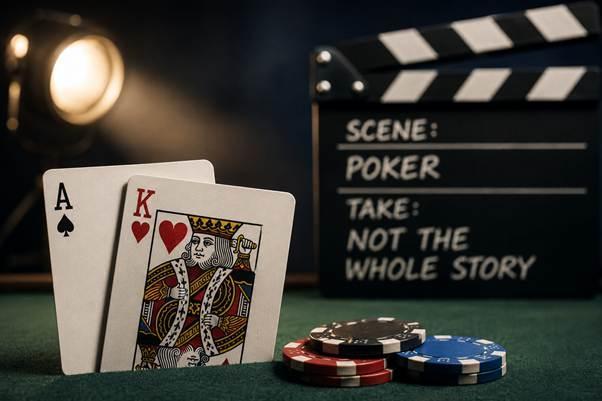
Movie poker loves the clean reveal: an ace turns over, a pair hits the felt, and the room understands who has power. Real Hold’em is rarely that tidy. A hand can look elegant on camera and still be ordinary once position, stack depth, table action, and the next betting round enter.
That gap helps make poker scenes watchable. Viewers are pulled forward by story pressure before they audit the details, a pattern that fits research on narrative transportation and TV drama enjoyment, where immersion helps audiences accept a dramatic world. In movie poker, that immersion can make overrated poker hands feel stronger than they are. The scene is not showing real games. It trains the viewer to feel that a beautiful starting hand means control.
Where The Hand Needs a Real Format
A sharper way to read scenes is to move the hand out of the close-up and into a format where the situation matters. In this case, this page on knockout poker tournaments presents a tournament style centered on player eliminations, including standard and mystery knockout formats, a useful context for why a hand’s value is never just its face value.
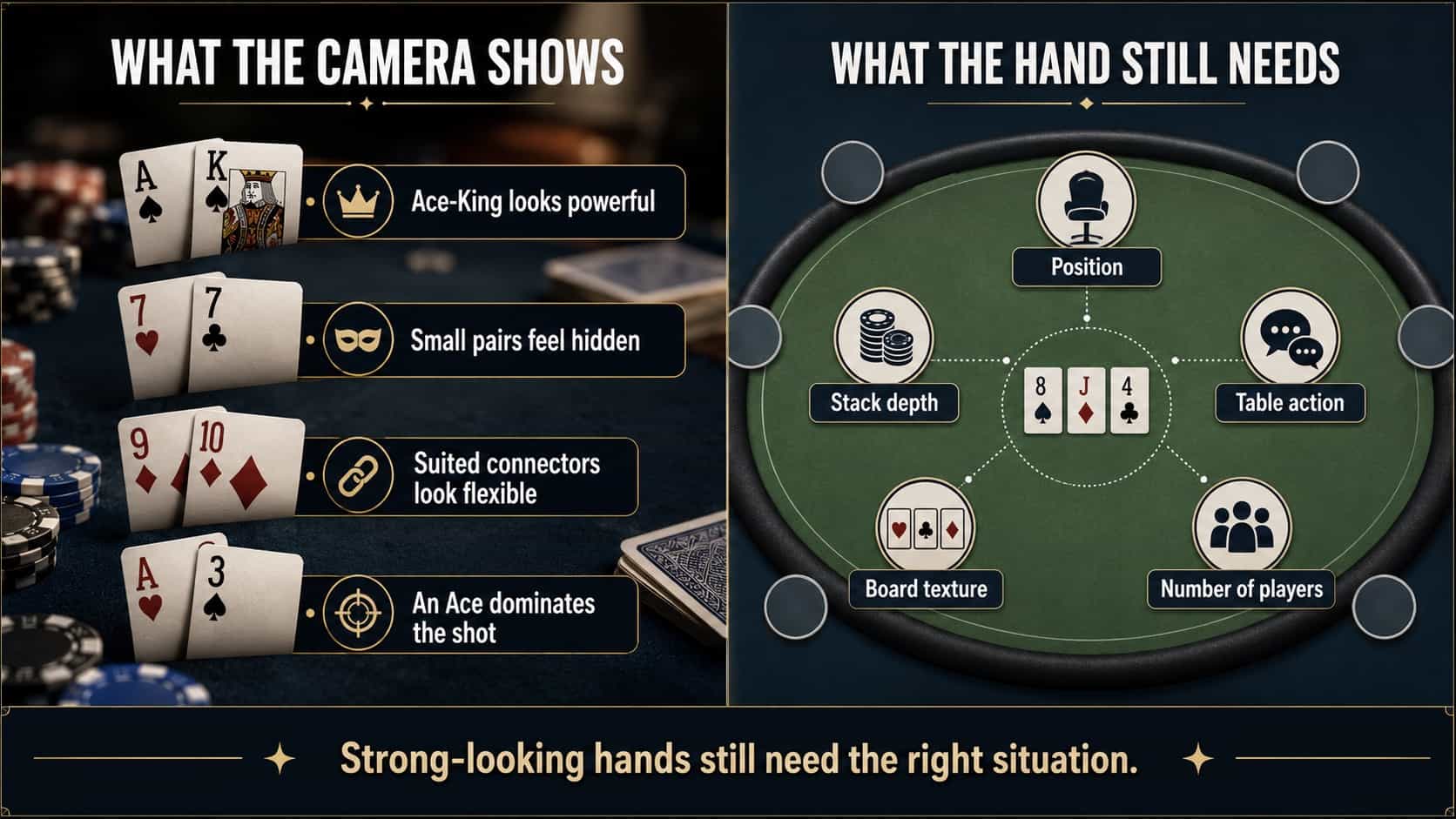
Suited connectors from early position can look stylish in a film because they imply movement and possibility, yet they usually need timing, a playable stack, and a board that develops kindly. Small pairs look like little traps waiting to become sets, though they ask for patience and the right price. Ace-high hands look clean because the ace dominates the frame, but in a multiway pot or from an early seat, that surface strength can shrink quickly. In knockout poker tournaments, these details become easier to notice because every hand sits inside position, stack pressure, table action, and elimination logic at once.
To see the same idea in motion, Ignition Casino’s short video, The 10 Poker Hands Everyone Overplays (and How to Fix It), walks through hands that often look better at first glance than they feel in context. Its K-8 example is useful because the hand changes meaning depending on seat and stack size. The video also covers suited connectors, small pairs, medium pairs, Ace-high, King-high, pocket Aces, Ace-King, and Ace-rag, with the same lesson: cards begin the story, but conditions decide its range.
Why The Camera Overstates Starting Hands
| Screen-Friendly Hand | Why It Looks Powerful | What The Scene Often Skips |
| Suited connectors | They suggest straights, flushes, and movement | Early position and weak boards |
| Small pairs | Viewers imagine the set | Waiting for rare improvement |
| Ace-King | It feels like 2 premium faces | The hand still needs help |
| Ace-rag | The ace owns the shot | Weak kicker trouble |
Film and TV need poker to be readable quickly. The audience has seconds to understand who feels confident, who is bluffing, and why the next card matters. Starting hands help because they are visible symbols. An ace says importance. A pair says stability. Matching suits say possibility. Ace-King says glamour.
Real poker is less symbolic. Jack-10 suited can be playable or awkward depending on where the player sits and how much resistance appears before the flop. Pocket sevens can feel solid until overcards arrive and the story becomes harder to tell. Even pocket Aces, the most famous starting hand, are still just a pair until the board develops.
This is where many poker movie mistakes begin. The scene treats the hand like a verdict. The game treats it like a question.
The Missing Character Is Position
Position is rarely given enough screen time because it is hard to dramatize without slowing the scene down. Yet it often explains why a strong-looking hand loses its shine. Acting later means the player sees more information first. Acting early means stepping into uncertainty before others reveal their intentions.
That is why K-8 can shift so dramatically. Heads-up, with fewer players involved, high cards can carry more weight. At a larger table from an early seat, the same hand can be thin because many players still have a chance to respond. A movie may frame the king as authority, but the table can tell another story.
For viewers, this makes poker scenes more interesting, not less. Once position becomes visible, tension stops depending only on the final card. The drama also lives in the pause before a decision, the order of action, and the player choosing not to chase a hand that only looks good from far away.
Better Viewing Starts With Better Questions
The most useful question is not “Was that hand good?” It is “Good for what situation?” Suited connectors, small pairs, Ace-high, and Ace-King are not bad hands. They are conditional hands. Their value rises or falls with position, stack depth, opponent action, and the board.
That distinction keeps the entertainment intact. A poker scene can still be stylish, tense, and memorable while taking shortcuts. The sharper viewer simply sees the shortcut. Weak hands look unbeatable because cinema rewards clean images, and poker rewards context. The best scenes let both coexist, giving audiences the thrill of a reveal while leaving room for the deeper suspense that uncertainty creates.

Thomas Miller is the founder and Editor-in-Chief of Seat42F, covering television, movies and streaming entertainment. He launched Seat42F in 2007 and has spent nearly two decades covering the entertainment industry.