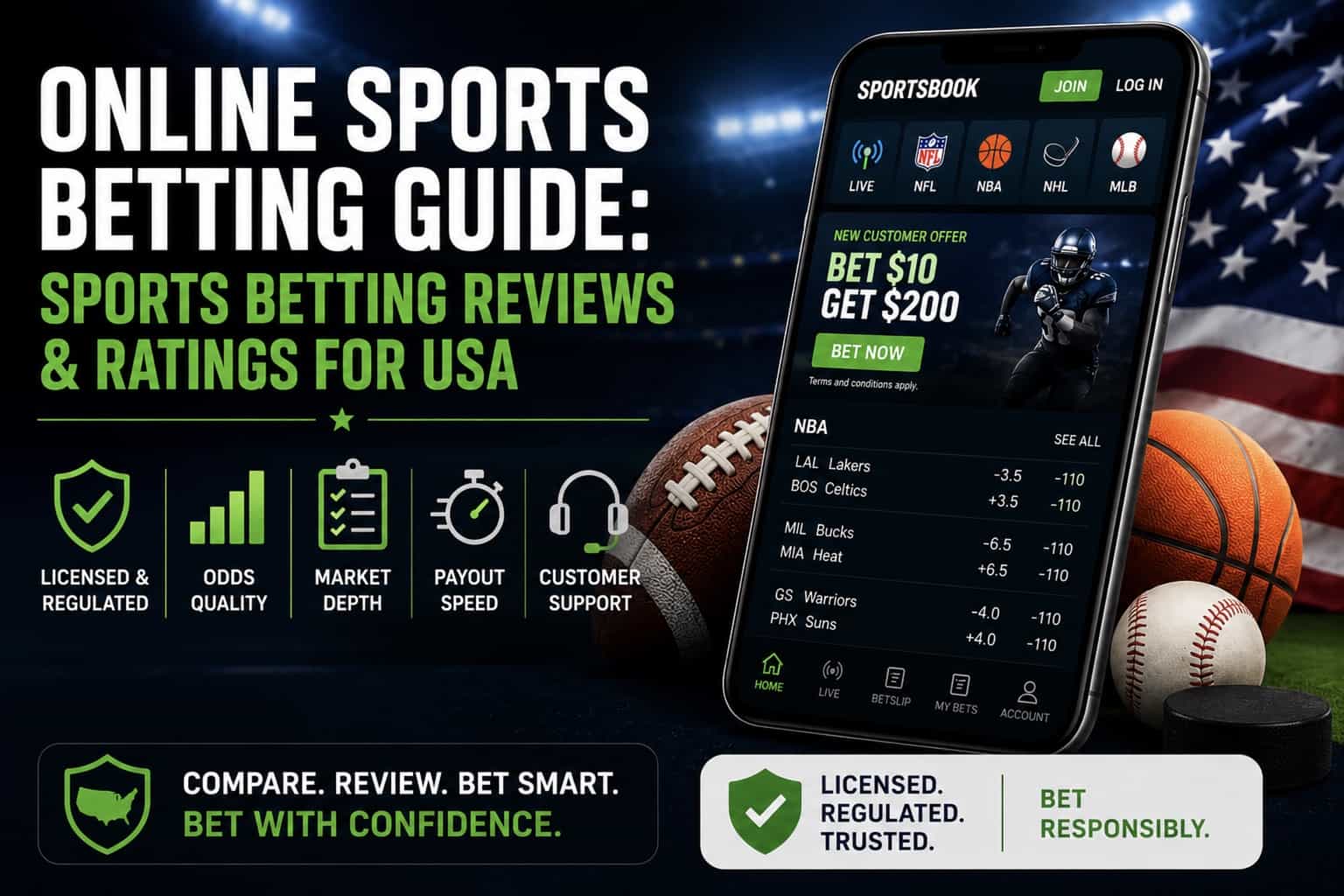
Eight years after the Supreme Court cleared the way for states to legalize sports wagering, online sports betting has become one of the fastest-growing corners of American entertainment. What began as a handful of pilot markets in 2018 is now a coast-to-coast industry: legal sportsbooks operate in nearly forty states, wagering apps sit alongside streaming services on millions of phones, and betting lines have become a routine part of pregame coverage on every major network. For newcomers, though, the sheer size of the market is exactly the problem — with dozens of licensed operators competing for attention, knowing where to start is harder than ever.
That is where independent comparison resources have stepped in. Long-running sports information platforms now publish detailed Sports Betting Reviews and ratings that break down licensed US sportsbooks on the criteria that actually matter — licensing status, odds quality, market depth, payout speed and customer support — giving bettors a structured way to compare options before they ever deposit a dollar. Much like reading a critic’s review before committing to a new series, checking a sportsbook’s rating first has quietly become standard practice for American bettors.
A Market Still Growing State by State
The numbers behind the boom are striking. Industry figures compiled by the American Gaming Association show Americans now legally wager well over $100 billion on sports each year, with online channels accounting for the overwhelming majority of that handle. Missouri became the latest state to launch regulated online wagering, and lawmakers in several remaining holdout states — including Texas, California and Georgia — continue to debate legalization bills each session.
That patchwork matters for consumers. Because sports betting is regulated state by state, the operators available to you, the sports you can bet on, and even the consumer protections you enjoy all depend on where you are standing when you tap “place bet.” A sportsbook that is fully licensed in New Jersey may not hold a license in Ohio, and offshore sites that accept US customers operate outside American consumer-protection rules entirely. The first job of any good review or rating, then, is simple: confirm the operator is licensed where you live.
What Sports Betting Reviews & Ratings Actually Measure
Serious review platforms have converged on a fairly consistent scorecard. When you see a sportsbook rated four stars instead of three, the gap usually comes down to a handful of measurable factors:
- Licensing and regulation — is the operator approved by a state gaming commission, and does it display that license clearly?
- Odds and margins — how competitive are the prices on moneylines, spreads and totals compared with the market average?
- Market depth — does coverage extend beyond the NFL and NBA to niche sports, player props and live in-game betting?
- Banking and payout speed — how quickly are withdrawals processed, and which payment methods are supported?
- Platform quality and support — app stability, ease of navigation, and whether a human answers when something goes wrong.
Payments in particular have become a differentiator. As with the broader entertainment economy — where digital platforms are increasingly adopting new payment technologies — sportsbooks now compete on how fast and flexibly they move money, and reviewers have started timing withdrawal speeds the way tech sites benchmark processors.
How to Read Ratings Like a Pro
A star rating is a starting point, not a verdict. Experienced bettors read past the headline number and look at how a score was built. A sportsbook with elite odds but slow payouts might suit a casual weekend bettor and frustrate a high-volume one; an operator with a smaller sports menu but excellent live-betting tools might be perfect for an NBA fan and useless for a golf follower. The best guides make their methodology explicit — how each category is weighted, when the review was last updated, and whether the reviewer actually deposited and withdrew real money.
There are red flags worth knowing, too. Be cautious of any “review” site that only lists offshore operators, hides its rating criteria, or promises outcomes no legitimate analyst would promise. Betting always carries risk, and any resource suggesting otherwise is marketing, not journalism.
Betting Responsibly Remains the Bottom Line
The growth of legal wagering has come with a parallel expansion of responsible-gambling tools, and reviewers increasingly score operators on these features as well: deposit limits, time-outs, self-exclusion programs and clear links to support resources. Every regulated US sportsbook is required to display responsible-gambling information, and the National Council on Problem Gambling operates a confidential helpline at 1-800-GAMBLER for anyone who feels their play is becoming a problem.
For American sports fans, the takeaway in 2026 is straightforward. Legal online sports betting is here to stay, the market is crowded, and the smartest first bet is an informed one — made with a licensed operator, a clear budget, and a trusted review in hand.

Thomas Miller is the founder and Editor-in-Chief of Seat42F, covering television, movies and streaming entertainment. He launched Seat42F in 2007 and has spent nearly two decades covering the entertainment industry.