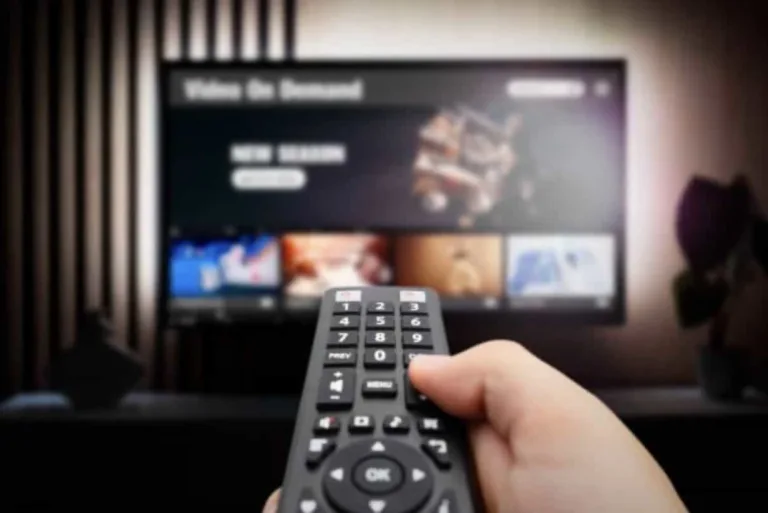
Remember when Sunday nights meant grabbing the TV guide from the coffee table to see what was on? Yeah, me neither and I’m guessing most of you under 40 have never even held one of those things. The whole ritual of planning your week around what was airing when feels almost quaint now, like something from a period drama.
These days, finding your next show to obsess over is a completely different experience. We’re living in this weird, wonderful world where algorithms know our taste better than we do, where a single TikTok can make a show explode overnight and where “what should I watch?” has become one of the most common texts between friends.
And honestly? It’s changed everything about how we relate to TV.
The Death of the Prime Time Schedule
There was something weirdly simple about the old system, wasn’t there? Thursday at 8pm meant one thing. Miss it and you were out of luck unless you remembered to set the VCR (which, let’s be honest, half of us never figured out how to program properly). Networks knew exactly when they had your attention, so they’d pump their marketing budget into promoting those prime time slots.
Now? Netflix couldn’t care less whether you’re watching at 2pm on a Tuesday or 4am because you can’t sleep. Hulu isn’t judging your 3am binge session.
This freedom is incredible, don’t get me wrong. But it’s also created this massive paradox. You’ve got literally thousands of shows sitting there, ready to stream whenever you want. So how do you possibly choose?
Enter the recommendation algorithm: that mysterious force that somehow knows you’re in the mood for a dark comedy about dysfunctional families even before you do. These things track everything. What you watched, what you skipped after five minutes, what you binged in one sitting. Then they compare your habits to millions of other viewers and make their best guess at what you’ll like next.
They’re pretty damn good at it too, though they still serve up some head-scratchers sometimes.
Social Media as the New Water Cooler
Word of mouth has always sold shows. But social media took that concept and put it on steroids.
When something like “The Last of Us” or “The Bear” starts trending on Twitter, it’s not just your coworker telling you about it the next morning. It’s millions of people talking about it simultaneously, creating this tidal wave of buzz that’s impossible to ignore. I’ve lost count of how many shows I’ve started watching purely because my entire feed was losing their minds over episode three or whatever.
TikTok’s become its own beast entirely. A fifteen-second clip can resurrect a show from years ago and send it rocketing up the streaming charts. I’ve watched “The Office” clips probably lead to more people discovering that show than NBC’s original marketing ever did.
The same discovery mechanics that revolutionised TV watching have spread everywhere. Sports betting sites now use similar recommendation systems to surface matches and markets based on what you’ve bet on before or what games you’ve watched. It’s the same basic idea: when there’s too much to choose from, you need smart filters.
Then there are the Facebook groups and subreddits dedicated to specific genres. True crime documentaries, Korean dramas, trashy reality TV: there’s a community for everything. These spaces dig up shows that even the best algorithm might miss. I’ve found some of my favourite obscure documentaries through a random Reddit comment with like three upvotes.
The Rise of Curated Lists and Influencer Recommendations
Streaming platforms figured out pretty quickly that pure algorithms weren’t enough. That’s why you see those themed collections everywhere now. “Cosy British Mysteries.” “Feel-Good Comfort Watches.” “90s Nostalgia Trip.”
These human-curated lists serve a different purpose. They’re designed to pull you out of your bubble, introduce you to something you’d never search for on your own. Sometimes that’s exactly what you need: something different from your usual pattern.
But the real game-changer has been YouTube creators and podcast hosts who’ve built entire channels around TV recommendations. When someone whose taste you’ve learned to trust gives a show their stamp of approval, it carries weight. It’s personal in a way that “because you watched Breaking Bad” just isn’t.
I’ve also noticed people starting to follow creators across platforms. If you loved “Succession,” you’re probably hunting down whatever Jesse Armstrong does next. Same with actors: where’s Brian Cox showing up now? This creator-centric approach to discovery isn’t new (we’ve done it with authors and musicians forever), but applying it to TV feels fresh.
Data Overload and Decision Fatigue
Here’s the thing nobody talks about enough: unlimited choice kind of sucks sometimes.
There’s actual research on this: too many options leads to decision paralysis. You know the feeling. You’ve spent thirty minutes scrolling through Netflix, reading synopses, watching trailers and you still haven’t picked anything. Meanwhile, your dinner’s getting cold and you’re more stressed than when you started.
The platforms are well aware of this problem. That’s why they keep tweaking things. Auto-play that starts the next episode before you can reconsider. “Top 10 in Your Country” lists that create artificial urgency. Those massive banner placements that basically scream “watch this one!”
Some people find this helpful. Others think it’s manipulative. Probably both things are true.
What’s interesting is watching how some viewers have adapted by imposing their own limits. Maybe they only keep two streaming subscriptions active at once. Or they commit to watching everything in the Criterion Collection before branching out. These self-imposed boundaries make the whole thing less overwhelming.
Looking Ahead at Content Discovery
So where’s all this heading?
The trend seems to be toward even more personalisation. We’re already seeing platforms experiment with mood-based recommendations or suggestions that change based on time of day. Some are testing features where friend groups can create shared watchlists and vote on what to watch together (which honestly sounds like a recipe for arguments, but whatever).
What’s pretty obvious is that we’re not going back. The TV guide model worked fine when there were four channels and everything aired on a schedule. That world’s gone. We’re living in the age of abundance now, which brings its own set of challenges.
The trick for both platforms and us as viewers is finding that sweet spot between algorithmic efficiency and genuine discovery. Because honestly? Sometimes the best shows are the ones you’d never think to search for. The ones that pop up because a friend texted you at midnight, practically yelling through the screen about this thing you have to watch right now.
Those unexpected discoveries, the ones that catch you completely off guard: that’s where the magic still happens.

Thomas Miller is the founder and Editor-in-Chief of Seat42F, covering television, movies and streaming entertainment. He launched Seat42F in 2007 and has spent nearly two decades covering the entertainment industry.