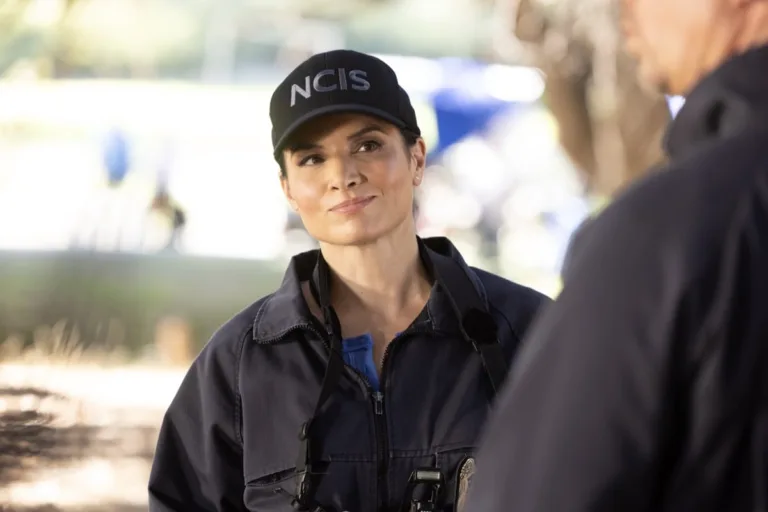
NCIS Season 24 Episode 4, “Like and Subscribe,” connects a murder investigation built around online spectacle with a quieter problem for Tony DiNozzo: his daughter is growing up, and he cannot investigate his way out of feeling left behind. The case has its share of familiar turns, but the parenting story gives the hour its most satisfying payoff.
Michael Weatherly plays Tony’s uncertainty well alongside Katrina Law’s Jessica Knight, whose advice is considerably simpler than the intervention he wants to stage. Sean Murray’s McGee, Gary Cole’s Parker and Wilmer Valderrama’s Torres follow a sailor’s death into a game show where public generosity conceals some ugly private behavior.
A Sailor’s Death Leads to Jordan Jackpot
A body dumped in the woods is discovered after appearing in photographs shared online. Petty Officer First Class Mark Brogan’s car contains what looks like a substantial amount of cash, while his family’s medical expenses give the investigators a reason to wonder where the money came from.
Mark’s son is undergoing cancer treatment. That detail initially makes the money look suspicious, but his wife pushes back against the suggestion that he must have been involved in something criminal. The investigation needs to explain his death without turning his financial desperation into proof of guilt.
Brian Dietzen’s Jimmy Palmer and Diona Reasonover’s Kasie Hines help redirect the inquiry. Mark’s injuries, a scorpion connected to the body and the discovery that most of the cash is fake lead toward an online competition run by Jordan Jackpot.
The apparent fortune is prop money used on the show. The scorpion also belongs to that world of challenges, humiliation and cash incentives. What first resembles a darker criminal operation turns out to be entertainment designed to hold viewers’ attention.
That is a useful change of direction. The episode gets more out of the contrast between a polished show and the people making it than it would from another straightforward argument over prize winnings.
The Game Show Makes Everyone Part of the Content
The agents arrive at a production where distress is difficult to distinguish from performance. An axe missing from a challenge set supplies a possible murder weapon, while the show’s treatment of its contestants produces more than one potential source of anger.
Caleb, a contestant who attacked Mark after losing money, looks like an obvious suspect. His account changes the meaning of that confrontation. He describes conditions intended to push contestants into emotional reactions and says his personal information was exposed after he complained.
Mark had offered to help him investigate what happened. Their apparent feud was therefore a misleading fragment of a more complicated relationship.
The show’s manipulation extends to NCIS itself. Jordan repackages the agents’ arrival as promotional material, presenting their intervention as an attack on his production. He can turn an investigation into an advertisement because he controls the footage his audience sees.
This is the sharper part of the satire. The threat is not simply that an online personality behaves badly. It is that he can make other people’s distress, and even attempts to investigate it, serve the same brand.
Tony’s Attempt to Help Tali Complicates the Case
Tali’s enthusiasm for Jordan’s videos gives that publicity stunt a personal consequence. Already responding less often to Tony, she becomes unhappy about NCIS interfering with a creator she likes.
Tony had invited her and her friends to D.C., offering a visit that would let him participate in the life she is building at boarding school. Her reaction to the investigation makes the distance between them feel larger.
Knight’s explanation is less alarming than Tony’s: Tali has made friends. Jimmy also understands that a teenager needing space does not necessarily mean a parent has done something wrong. Tony wants an active solution to a situation that may require patience.
The episode makes good use of his professional habits. Researching the problem and gathering information are familiar ways for him to regain control, but neither guarantees the conversation he wants with his daughter.
His meeting with Jordan briefly makes it appear that he is allowing those feelings to influence the investigation. Instead, Tony uses the exchange to obtain access needed to examine the production’s private app. It is a clever character beat, even if the speed and ease of the technical maneuver deserve some skepticism.
The App Provides a Lead, but Nathan’s Grievance Explains the Murder
The contestants’ communications lead the team toward Chelsea, the show’s legal counsel. Mark had identified a dangerous problem in the app, creating another plausible motive for silencing him.
The software raises concerns well beyond an unpleasant game show. Chelsea’s explanation, however, reframes her contact with Mark: she had enlisted his help with the problem after losing contact with the developers.
The decisive evidence instead exposes the relationship between Jordan and Nathan, the producer who helped create the Jackpot identity. A recording reveals how much of the successful persona originated with Nathan rather than the man profiting from it.
Their dispute is both financial and personal. Nathan is being excluded from the app deal, and his anger also comes from Jordan’s failure to support him when his mother died. Mark’s murder connects to Nathan’s attempt to retrieve evidence that could expose the real history behind the brand.
Nathan confesses, resolving the killing without making Jordan innocent of everything else. That distinction matters. Jordan can be responsible for exploiting people without being the murderer, and Nathan’s legitimate grievances do not excuse killing Mark.
The culprit is not especially surprising, but the motive fits the episode’s interest in unequal relationships. Nathan helped build an image of generosity while discovering how little generosity remained for him off camera.
Tony Finds a Way to Stay Close Without Demanding a Reply
The best resolution belongs to Tony and Tali. Rather than insisting that she communicate on his schedule, he finds a pair of connected lights that allow them to signal they are thinking about each other.
It is a modest gesture with a clear emotional purpose. Tony remains available without requiring a text conversation every time he misses her. He adapts the advice he has been given instead of simply abandoning his desire to connect.
Jordan also gets an opportunity to do something useful without performing for an audience. He provides financial help and visits the hospital dressed as the superhero Mark used to portray for his son. The absence of a camera crew makes that choice more meaningful than another filmed promise.
The ending is warm, though it arrives quickly after the episode exposes the production’s behavior. A charitable gesture is a start toward making amends; the harm done to the contestants deserves more than a neatly packaged redemption.
NCIS Season 24 Episode 4 Ending Explained
Who Killed Mark Brogan?
Nathan, Jordan’s producer and longtime friend, confesses. The murder connects to his effort to retrieve a recording that exposes his role in creating Jackpot and his anger over being excluded from the brand’s financial rewards.
Do Tali or Ziva Appear?
The episode keeps both characters part of Tony’s life without bringing them onscreen. Tony’s invitation to D.C. does not confirm a future guest appearance.
What Are Tony and Tali’s Lights For?
The connected lights let them acknowledge each other without needing to start a conversation. Tony finds a way to offer reassurance while respecting Tali’s independence.
Final Verdict
“Like and Subscribe” works best when it links attention with the need to feel valued. Mark’s investigation uncovers exploitation beneath an entertaining surface, while Tony learns that being present for Tali does not mean constantly hearing from her. The mystery is familiar and Jordan’s turn toward generosity is abrupt, but the father-daughter resolution gives this lighter hour a worthwhile emotional center. Future episodes would benefit from sharing that attention more evenly across the ensemble.
Tony Learns When to Give Tali Space
A familiar murder mystery gains warmth from Tony’s parenting worries and an ending that values private kindness over public performance.
Tony and Tali’s connected lights offer reassurance without demanding a conversation.
Michael Weatherly, with Katrina Law as a grounded sounding board.
The parenting story, misleading contestant feud and contrast between public image and private behavior.
A predictable culprit, convenient app access and a quick redemption beat.
Who wrote and directed “Like and Subscribe”?
Sydney Mitchel and Amy Rutberg wrote the episode. Tawnia McKiernan directed.
Is the prize money real?
The cash found in Mark’s car is largely prop money from the game show, which initially misleads the investigation.
When is the next new NCIS episode?
Season 24 Episode 5, “Speechless,” airs Tuesday, November 10, from 8:00–9:00 p.m. ET/PT on CBS.
Who guest stars in “Speechless”?
Katrina Law’s daughter, Kinley Andreen, plays Chloe, an 8-year-old witness whose Marine mother is missing.
When Does NCIS Return?
NCIS Season 24 Episode 5, “Speechless,” premieres Tuesday, November 10, from 8:00–9:00 p.m. ET/PT on CBS. CBS confirms Kinley Andreen’s guest appearance as Chloe, a young witness with a surprising skill.
Watch live through your local CBS feed with Paramount+ Premium, or stream the next day on Paramount+. “Like and Subscribe” aired October 27 and is available on demand October 28. Catch up through the official NCIS series page.
More NCIS Coverage
Explore our NCIS coverage hub, browse the “Like and Subscribe” photos, and revisit our “Sleeping Dogs” recap and review.

Thomas Miller is the founder and Editor-in-Chief of Seat42F, covering television, movies and streaming entertainment. He launched Seat42F in 2007 and has spent nearly two decades covering the entertainment industry.