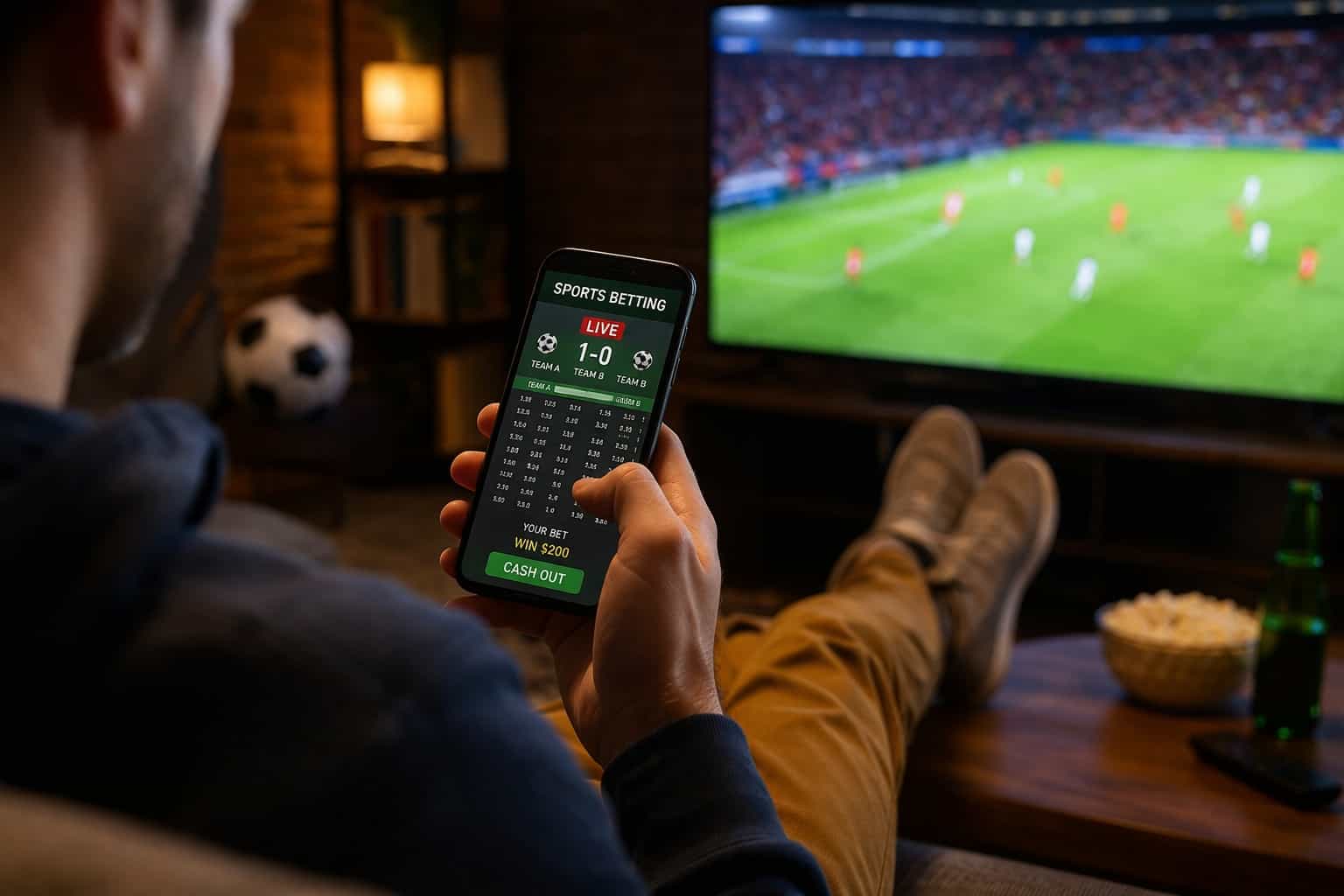
Not that long ago, betting still felt slightly separate from the main event. A person might place something before kickoff, maybe glance at the score later, and that would be it. The match itself stayed in the middle of the experience. Everything else sat around it. Commentary added context, social media added noise, and betting was more like an extra layer for people who wanted it. That is not really how it feels now.
These days, for a lot of fans, betting moves with the match rather than around it. It shows up in the same live window of attention. A team starts building pressure, a player looks off, the pace changes, the manager makes a substitution, and suddenly that moment is not just part of the story of the game. It is something being interpreted right away from multiple angles at once. That is a big change, and it says a lot about how sports culture itself has shifted.
The Phone Stopped Being a Distraction
One of the biggest reasons is simple. People do not watch live sport in a single straight line anymore. They watch, check something, come back, message someone, look at stats, scroll reactions, then lock back into the broadcast again. It is not even always conscious. It just happens. The second screen became normal so gradually that most people barely notice the habit now. That changed the shape of live attention.
The phone stopped feeling like something that pulled viewers away from the match. In many cases, it became one of the places where the match was actually being processed. Not watched in the pure visual sense, maybe, but understood, tracked, and reacted to. Once that happened, sports betting had an obvious opening. It matched the same pattern naturally. Fast checks, quick judgments, immediate reactions. On platforms like Betway, that rhythm feels especially familiar because the live experience sits so close to the way people already follow sport, moving between the broadcast, the stats, and the small moments that suddenly seem worth acting on. It belonged to the same behavioral rhythm.
Small Moments Mean More Than They Used To
That is probably where the real shift happened. Live sport is full of little moments that used to pass without much follow-up unless you were a particularly obsessive fan. A defender starts getting exposed out wide. A tennis player loses confidence on the second serve. A basketball team suddenly looks tired getting back in transition. None of that ends the game on its own, but it changes the feeling of the game. People sense that before they can always explain it clearly. Modern betting platforms built themselves around that kind of moment.
They did not just ask users to think about who wins and who loses. They started offering ways to react to what was unfolding right there in front of them. Not in theory. Not later. Right then. So the viewing experience became more immediate, but also more fragmented in an interesting way. Fans were no longer only following the scoreline. They were following momentum, sequences, patterns, hints. That gave more weight to the middle of the match, not just the ending.
It Started to Feel Like Part of the Broadcast
Technology helped, obviously, but not only in the dramatic sense people usually imagine. Yes, the feeds got faster. Yes, the apps got smoother. Yes, live markets became easier to navigate. All of that mattered. But what mattered just as much was that the whole experience became less awkward. That sounds minor, though it really is not.
When a platform feels clumsy during a live match, people notice immediately. A delay feels longer. A confusing menu feels more annoying. A badly timed refresh makes the whole thing feel unreliable. The better betting products figured out that they had to match the tempo of live sport, not just technically but emotionally as well.
That meant clearer layouts, quicker navigation, more readable odds movement, and fewer moments where the user felt pushed out of the flow. Once that happened, betting stopped feeling like a pause from the matchday experience. It began to feel more like one of the live layers around it, similar to commentary, stat tracking, or social reaction. That is when it really moved closer to the center.
Fans Now React in Public and in Real Time
There is also a broader cultural reason this became so normal. Watching sports is more public than it used to be. Even when people are sitting alone, they are often still experiencing the match socially. They are sending messages, posting reactions, checking what others are saying, following clips, reading instant opinions, arguing over decisions before the replay has even finished. Sport has become more conversational during the event itself.
Betting fits neatly into that environment because it rewards the same instinct. See something. Read it quickly. Decide what it means. Respond. That overlap matters. It helps explain why betting no longer feels tucked away in a separate corner of sports culture. It lives in the same fast-moving ecosystem as the rest of live fan behavior.
That does not mean everyone engages with sport in the same way, and it definitely does not mean betting has replaced the game. It has not. The match is still the reason any of this matters in the first place. But for many viewers, betting has become part of how the live experience is framed and interpreted, especially when the event is tense, open, and constantly changing.
Not Secondary Anymore
The phrase second screen still exists, but it feels a little outdated now. That screen is not really secondary in the old sense. It is often where the live event gets filtered, measured, discussed, and reacted to while it is still unfolding. Betting grew inside that environment because modern sports culture gave it room to. The habits were already there. The technology caught up. The audience got used to reacting in real time. Everything moved in the same direction. So what used to feel like an extra feature on the edge of matchday now feels, for many fans, like part of the event’s live texture.

Thomas Miller is the founder and Editor-in-Chief of Seat42F, covering television, movies and streaming entertainment. He launched Seat42F in 2007 and has spent nearly two decades covering the entertainment industry.