Watch any great sports movie with the sound off and you can still tell who is who. The underdogs look scrappy, the champions look polished, and the rivals never get confused with the heroes.
That clarity is no accident. Costume designers, cinematographers and directors work together to make a team feel like a real group with a history, a personality and something to prove.
Here is a closer look at the visual thinking behind it, and what it means if you ever want to design a team look of your own.
Color Does the Talking Before the Dialogue
Color is the fastest storytelling tool a sports film has. A team dressed in a strong, simple palette can be read from the back row of a crowded stadium scene or from a camera far above the field.
Think of how The Mighty Ducks built a scrappy, lovable identity around a rebrand, or how Remember the Titans used its school colors to anchor a story about unity. When the palette is clear, the audience never has to stop and ask which side is which.
Filmmakers also use color emotionally. Brighter, fresher tones can suggest optimism and new beginnings, while faded or muted shades can signal a team that has been overlooked for years. A shift in color over the course of a film can quietly say that something has changed.
The Condition of a Uniform Tells a Story
A uniform is more than fabric. In many classic films, the way a kit fits and wears says as much as a line of script. Oversized, mismatched jerseys suggest a ragtag group with little funding.
Crisp, tailored sets suggest a program with tradition and resources. Hoosiers leaned on a small-town simplicity that made the team feel like part of the community, not a corporate brand.
This is where the audience reads character. A player tugging at a loose sleeve or proudly smoothing a number is showing us how he feels about belonging, without a word being spoken.
Contrast Keeps Every Play Readable
The best sports films make sure the opposing team looks clearly different from the heroes. Rivals are often placed in darker, harsher or more severe tones so the audience can follow the action instantly.
This also shapes how we feel about them. A sleek, uniform look can make a favorite seem intimidating, while a mismatched hero team becomes easier to root for.
In editing, this contrast saves time. When a quick cut shows a few players in motion, the colors tell us who has the ball and who is chasing, which keeps fast scenes exciting rather than confusing.
Filmmakers tend to lean on a handful of visual tools when they want a team to feel distinct on screen:
- A bold, limited color palette that is easy to spot in wide shots
- Uniform wear and fit that hint at a team’s budget and pride
- Contrast between rival teams so every play reads instantly
- Small details like numbers, trim and lettering that stay consistent from scene to scene
- Costume changes that track a team’s growth or decline.
Continuity Makes the Team Feel Real
Sports films are often shot out of order, over many weeks, with dozens of extras. That makes continuity a serious job.
Numbers, lettering, stripes and trim must match from the first practice to the final game, and a team that has been through a muddy, rainy match must look believable in each scene, whether it is clean, damp or worn down.
Continuity teams often keep several copies of the same costume so that a scene can be reshot without a visible mismatch.
One practical lesson carries over from this to real life: if you plan a custom team look, settle on the colors, lettering style and number placement first, then keep them identical across every garment so the group looks unified.
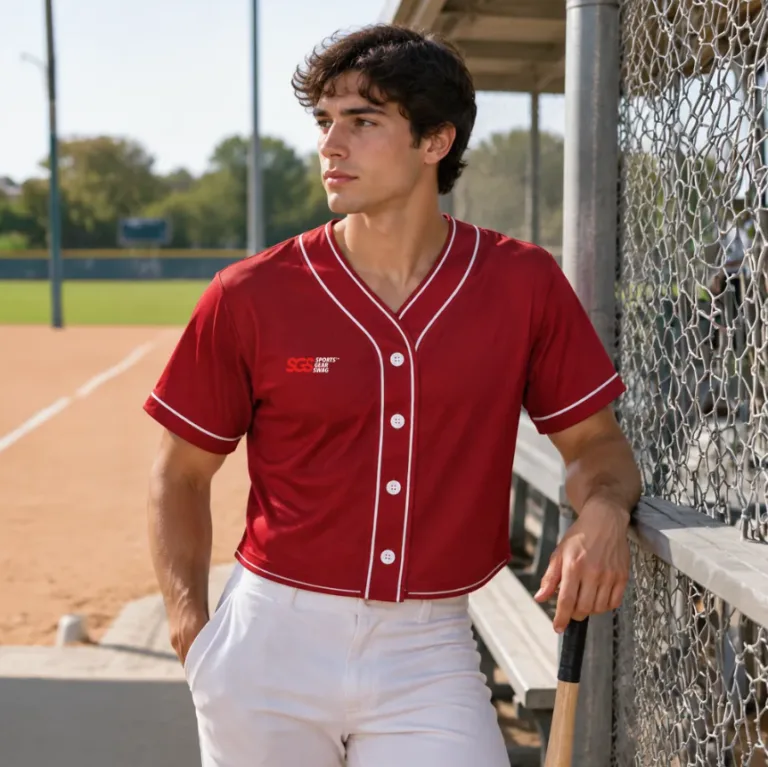
For a recreational club, a thoughtful starting point is to explore custom baseball jerseys from Sports Gear Swag for an original team identity.
Costume Design Is Not the Same as a Real Team Kit
It helps to separate what works on a film set from what works for an actual team. A costume is built to look right on camera, for a limited number of scenes, and it may be adjusted with clips, pins or tailoring for a single shot.
A real team kit has to survive games, washing and movement, and it must fit each player properly. Movie costumes also are not a template for official products, and any film’s marks or artwork belong to their owners, so a real design should be your own original work.
| Pro Tip: That difference matters to a coach, parent or club organizer. Screen magic can hide a sleeve that’s too tight or a number that peels. A real player can’t hide either one. |
Design Your Own Team Look With Care
If these films have inspired you to give your own group a distinct look, the process is friendlier than it sounds. Start by sketching a design online with a simple palette and a clear number style, borrowing the film-world habit of keeping things readable from a distance.
Then check each player’s measurements instead of guessing sizes, since fit affects comfort as much as appearance. Finally, verify the current product options, such as fabrics, styles and available colors, before you commit, because they can change over time.
Do that, and your team will have what the best sports films always give theirs: a look that feels earned, consistent and unmistakably its own.

Thomas Miller is the founder and Editor-in-Chief of Seat42F, covering television, movies and streaming entertainment. He launched Seat42F in 2007 and has spent nearly two decades covering the entertainment industry.